Artificial intelligence has completely changed content creation. Whether you’re a blogger, freelancer, digital marketer, entrepreneur, or SEO professional, AI writing tools can save hours of work.
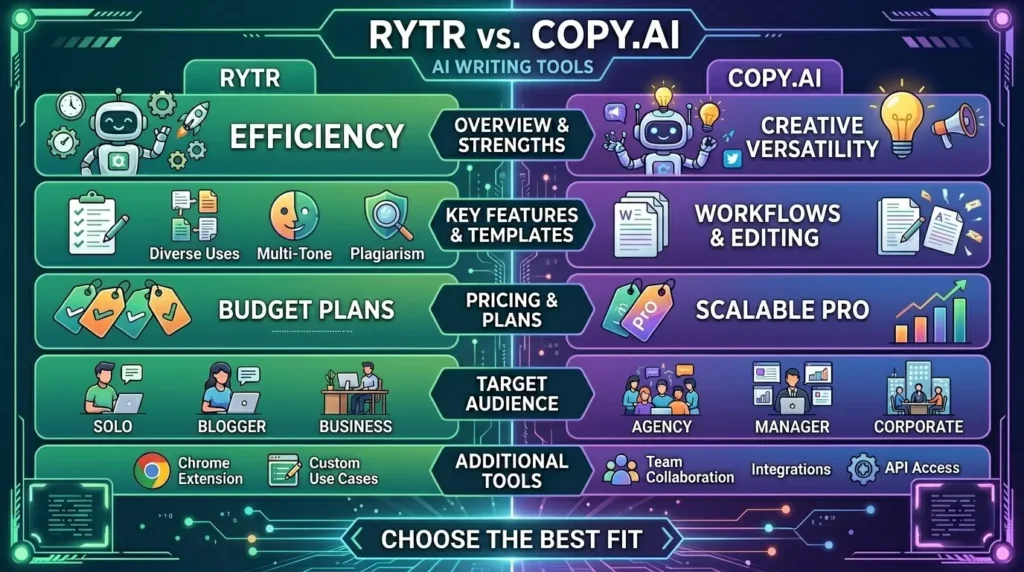
Two of the most popular AI writing assistants are Rytr and Copy.ai. Both help users generate high-quality content within seconds, but they serve different audiences and use cases.
In this detailed comparison, we’ll compare Rytr vs Copy.ai based on:
- Features
- AI writing quality
- SEO capabilities
- Ease of use
- Templates
- Pricing
- Integrations
- Pros & Cons
- Best use cases
If you’re trying to decide which AI content generator is worth your investment, this guide will help.
Quick Comparison Table
| Feature | Rytr | Copy.ai |
|---|---|---|
| AI Model | Advanced LLM | Advanced LLM |
| Ease of Use | ⭐⭐⭐⭐⭐ | ⭐⭐⭐⭐⭐ |
| Templates | 40+ | 90+ |
| Blog Writing | Excellent | Excellent |
| Marketing Copy | Very Good | Outstanding |
| Long-form Content | Good | Excellent |
| SEO Support | Basic | Better Workflow |
| Team Collaboration | Limited | Advanced |
| Free Plan | Yes | Yes |
| Best For | Beginners & Freelancers | Agencies & Marketing Teams |
What is Rytr?
Rytr is an affordable AI writing assistant designed for bloggers, students, freelancers, startups, and marketers. It focuses on fast content generation with an intuitive interface and dozens of writing templates.
Best Features
- AI blog writer
- Email generator
- Product descriptions
- Social media captions
- Ad copy generation
- Landing page content
- AI paragraph generator
- Built-in plagiarism checker
- Tone customization
- Multiple language support
Pros
- Very affordable
- Beginner-friendly
- Fast content generation
- Clean interface
- Excellent free plan
Cons
- Limited long-form editing
- Fewer collaboration features
- Less powerful workflows
What is Copy.ai?
Copy.ai is one of the most advanced AI copywriting platforms available today. It offers powerful workflows, marketing automation, and AI-powered content creation for businesses.
Best Features
- Blog generation
- Sales copy
- Marketing campaigns
- Email automation
- Product descriptions
- AI workflows
- Brand voice
- Team collaboration
- Workflow automation
- AI-powered brainstorming
Pros
- Excellent marketing content
- Powerful workflows
- Better collaboration
- Large template library
- High-quality output
Cons
- Higher pricing
- Slight learning curve
- Some advanced features require premium plans
Writing Quality Comparison
Rytr
Rytr produces concise, readable, and natural content suitable for:
- Blog introductions
- Product descriptions
- Social media posts
- Emails
- Short articles
Its outputs often require minor editing for long-form SEO articles.
Copy.ai
Copy.ai generates more comprehensive content and performs exceptionally well for:
- Long-form blogs
- Marketing campaigns
- Sales pages
- Landing pages
- Email sequences
- Brand messaging
For professional marketers, Copy.ai generally provides more polished drafts.
Winner: Copy.ai
Templates Comparison
Rytr
Offers more than 40 templates including:
- Blog ideas
- Blog outline
- Paragraph writer
- Story generator
- Email writing
- Social media
- Video descriptions
Copy.ai
Offers over 90 templates including:
- Sales copy
- LinkedIn posts
- Blog content
- Facebook Ads
- Google Ads
- Product launches
- Startup ideas
- Ecommerce descriptions
Winner: Copy.ai
SEO Features
Rytr
- Keyword support
- Meta description writing
- Blog outlines
- Headline generator
Copy.ai
- Better content workflows
- AI content expansion
- Content rewriting
- Marketing optimization
- SEO-friendly blog drafting
Neither replaces dedicated SEO tools like Surfer SEO or Semrush, but both help accelerate SEO content creation.
Winner: Copy.ai
User Interface
Both platforms have modern dashboards.
Rytr focuses on simplicity.
Copy.ai focuses on productivity and workflow automation.
Winner: Tie
Pricing Comparison
Rytr
- Free Plan
- Affordable Premium Plans
- Budget-friendly for individuals
Copy.ai
- Free Plan
- Premium Plans
- Enterprise Solutions
Winner: Rytr
Best For Beginners
Choose Rytr if you:
- Are new to AI writing
- Need affordable pricing
- Write blogs occasionally
- Need quick content generation
Best For Businesses
Choose Copy.ai if you:
- Run a marketing agency
- Create large amounts of content
- Need workflow automation
- Have multiple team members
Rytr vs Copy.ai: Pros and Cons
Rytr
Pros
- Affordable
- Easy to learn
- Fast writing
- Great free version
- Multiple writing tones
Cons
- Limited advanced workflows
- Basic collaboration
- Shorter content quality
Copy.ai
Pros
- Superior workflows
- Better marketing content
- Large template library
- Great collaboration
- Powerful automation
Cons
- More expensive
- Advanced features require paid plans
Final Verdict
Both Rytr and Copy.ai are excellent AI writing tools, but the best choice depends on your needs.
Choose Rytr if affordability and simplicity are your priorities. It’s perfect for freelancers, bloggers, and students who need fast, high-quality content without spending much.
Choose Copy.ai if you manage content at scale, run marketing campaigns, or work with a team. Its advanced workflows and collaboration features make it a stronger option for businesses and agencies.
For most individual users, Rytr offers better value for money. For professional marketing teams, Copy.ai is the more powerful solution.
Related Articles
If you’re interested in more AI tool comparisons, visit:
You can also explore comparisons like:
- ChatGPT vs Claude
- Jasper vs Copy.ai
- Writesonic vs Rytr
- Grammarly vs QuillBot
- Notion AI vs ChatGPT
- Best AI Writing Tools
- AI Content Generators
- AI Copywriting Software
Semantic SEO Keywords
- Rytr review
- Copy.ai review
- AI writing tools
- Best AI writer
- AI content generator
- AI copywriting software
- AI blog writer
- AI content creation
- Content writing software
- AI text generator
- Copy.ai alternatives
- Rytr alternatives
- AI marketing tools
- AI copywriting comparison
- Best AI content generator
- AI writing assistant
- SEO writing tools
- AI blogging tools
- AI productivity software
- AI for marketers
Internal Link
AI Trends Hub