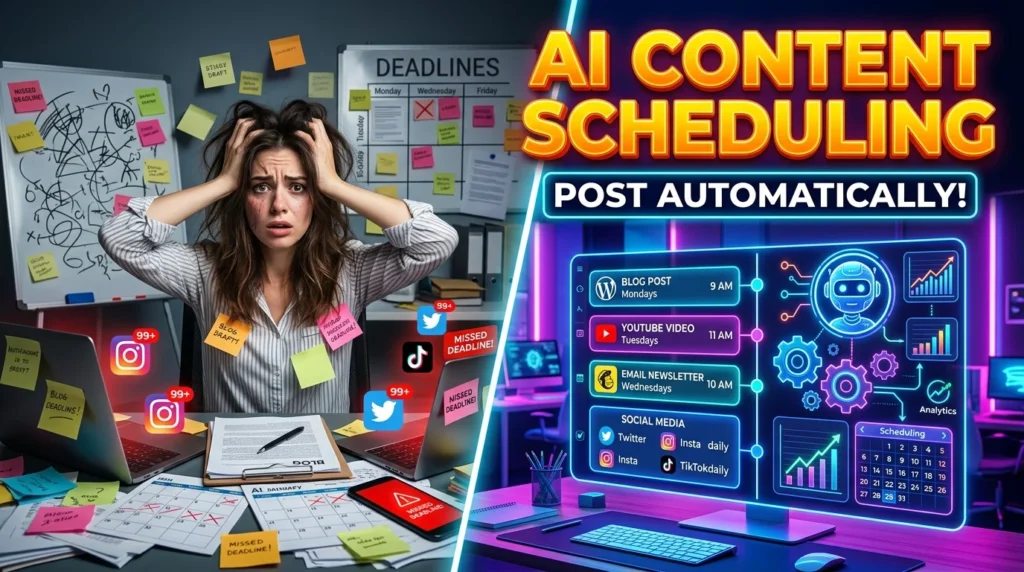
Creating great content is only part of a successful marketing strategy. Publishing it consistently at the right time is equally important. Whether you manage a blog, YouTube channel, social media accounts, or email campaigns, keeping up with a content schedule can quickly become overwhelming.
Artificial Intelligence (AI) helps simplify this process by automating content planning, generating publishing schedules, recommending the best posting times, and coordinating content across multiple platforms. Many AI-powered marketing tools analyze audience behavior and historical engagement to suggest optimal publishing times and streamline workflows. (buffer.com)
If you want to save time while maintaining a consistent online presence, AI-powered content scheduling can significantly improve your workflow.
For more AI tutorials, productivity guides, and software reviews, visit https://aitrendshub.com.
What Is AI Content Scheduling?
AI content scheduling uses artificial intelligence to plan, organize, and automatically publish content across different digital platforms.
Instead of manually deciding when to publish each post, AI helps you:
- Build content calendars
- Recommend posting times
- Schedule posts automatically
- Organize campaigns
- Track publishing consistency
- Optimize posting frequency
This reduces manual planning while improving efficiency.
Benefits of Using AI for Content Scheduling
1. Maintain a Consistent Publishing Schedule
Consistency helps build audience trust and improve long-term visibility. AI ensures your content is published according to a planned schedule without requiring constant manual effort.
2. Save Time
Rather than logging into multiple platforms every day, AI scheduling tools allow you to prepare content in advance and automate publishing across blogs, social media, and email campaigns.
3. Identify the Best Publishing Times
Many AI-powered scheduling platforms analyze engagement data to recommend when your audience is most likely to interact with your content. While these recommendations are useful, they should be reviewed alongside your own analytics and goals. (hootsuite.com)
4. Improve Team Collaboration
AI scheduling tools often include shared calendars, approval workflows, and campaign planning features that make collaboration easier for marketing teams.
5. Reduce Missed Deadlines
Automated reminders and scheduled publishing help ensure content is delivered on time, even during busy periods.
Step 1: Create Your Content Calendar
Begin by planning your upcoming content.
Include:
- Blog articles
- Social media posts
- Email newsletters
- Videos
- Product announcements
- Promotional campaigns
AI can help organize these ideas into a structured publishing calendar.
Step 2: Generate Content Ideas with AI
Many AI assistants can suggest topics based on:
- Trending searches
- Seasonal events
- Industry news
- Frequently asked questions
- Audience interests
This makes it easier to maintain a steady pipeline of content.
Step 3: Choose an AI Scheduling Tool
Popular AI-powered scheduling platforms include:
- Buffer
- Hootsuite
- SocialBee
- Metricool
- Later
- Sprout Social
- Publer
- CoSchedule
These tools provide scheduling, analytics, and automation features for different types of content.
Step 4: Schedule Your Content
Upload your completed content and choose:
- Publishing date
- Time
- Platform
- Target audience (where supported)
- Campaign category
The platform will publish your content automatically according to your schedule.
Step 5: Monitor Performance
After publishing, review metrics such as:
- Engagement
- Click-through rate
- Reach
- Shares
- Comments
- Conversion rate
Use these insights to improve future scheduling decisions.
Best AI Content Scheduling Ideas
AI can help automate:
- Weekly blog publishing
- Social media calendars
- YouTube upload planning
- Email newsletter scheduling
- Product launch campaigns
- Holiday marketing campaigns
- Evergreen content recycling
- Multi-platform content distribution
Best AI Prompts for Content Scheduling
Try prompts like these:
- “Create a 30-day social media content calendar.”
- “Suggest the best publishing schedule for my blog.”
- “Generate one week of LinkedIn post ideas.”
- “Plan a monthly email marketing campaign.”
- “Create a YouTube publishing schedule.”
- “Organize these articles into a content calendar.”
- “Recommend posting times for maximum engagement.”
- “Repurpose this blog into social media posts.”
Best Practices
To maximize results:
- Create content in batches.
- Review AI recommendations before publishing.
- Maintain a consistent posting schedule.
- Analyze audience engagement regularly.
- Adjust your calendar based on performance.
- Combine automation with human creativity and editorial review.
Common Mistakes to Avoid
Avoid these common issues:
- Scheduling months of content without reviewing it.
- Publishing without proofreading.
- Ignoring analytics.
- Posting too frequently or too infrequently.
- Relying solely on AI-generated recommendations without considering your audience.
The Future of AI Content Scheduling
AI scheduling tools continue to evolve with features such as predictive analytics, automated content optimization, cross-platform campaign coordination, and personalized publishing recommendations. As these systems improve, marketers will spend less time managing calendars and more time creating valuable content and refining strategy. (sproutsocial.com)
Final Thoughts
Learning how to schedule content using AI can help creators and businesses maintain consistency, save time, and improve publishing efficiency across multiple platforms. By combining AI-powered planning, scheduling, and performance analysis with thoughtful content creation, you can build a more organized and effective marketing workflow.
For more AI tutorials, software reviews, and productivity tips, visit https://aitrendshub.com.