Email remains one of the most effective digital marketing channels, delivering a high return on investment when used strategically. However, manually writing and sending emails to every customer can quickly become overwhelming as your business grows.
Artificial Intelligence (AI) makes email marketing smarter by automating repetitive tasks, personalizing messages, optimizing subject lines, and scheduling campaigns at the best times. Whether you’re running an online store, SaaS company, startup, or small business, AI can help you communicate with customers more efficiently while improving engagement.
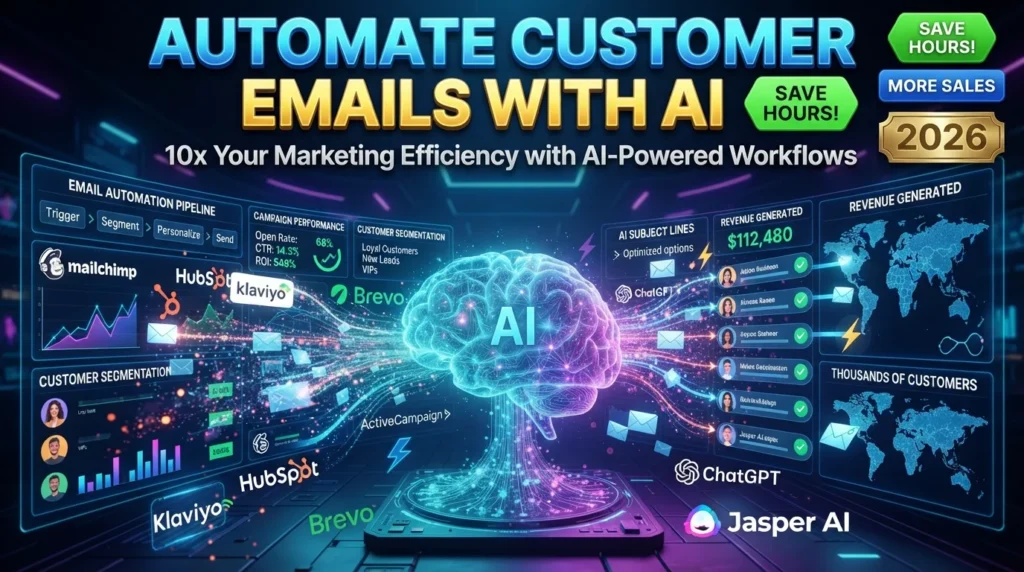
In this guide, you’ll learn how to automate customer emails with AI, discover the best AI email marketing tools, and follow a step-by-step process for building automated email workflows in 2026.
For more AI software reviews, business guides, marketing tutorials, and automation tips, visit:
What Is AI Email Automation?
AI email automation combines artificial intelligence with email marketing platforms to automatically create, personalize, schedule, and optimize email campaigns based on customer behavior and business goals.
AI can help automate:
- Welcome emails
- Follow-up emails
- Product recommendations
- Abandoned cart reminders
- Order confirmations
- Appointment reminders
- Newsletter creation
- Re-engagement campaigns
- Customer feedback requests
- Promotional campaigns
Benefits of AI Email Automation
Using AI for email marketing offers several advantages.
Key Benefits
- Save time
- Improve open rates
- Increase click-through rates
- Personalize customer experiences
- Reduce manual work
- Improve customer engagement
- Increase conversions
- Optimize send times
- Scale marketing campaigns
- Generate valuable performance insights
Step 1: Choose an AI Email Marketing Platform
The first step is selecting an email platform with AI-powered features.
Popular AI Email Tools
Mailchimp
Best for:
- Small businesses
- Email automation
- Audience segmentation
HubSpot AI
Best for:
- CRM integration
- Marketing automation
- Lead nurturing
Brevo (formerly Sendinblue)
Best for:
- Transactional emails
- Marketing campaigns
- Automation workflows
Klaviyo
Best for:
- E-commerce businesses
- Personalized email marketing
ActiveCampaign
Best for:
- Advanced automation
- Customer journeys
Step 2: Build Your Email List
Successful automation starts with a high-quality subscriber list.
Collect email addresses through:
- Website forms
- Landing pages
- Newsletter signups
- Lead magnets
- Product purchases
- Webinar registrations
Always obtain proper consent and comply with applicable privacy and email marketing regulations.
Step 3: Segment Your Audience
AI can automatically group subscribers based on:
- Purchase history
- Browsing behavior
- Location
- Interests
- Customer lifecycle stage
- Engagement level
Segmentation helps deliver more relevant content to each audience.
Step 4: Create Automated Workflows
Common AI-powered workflows include:
Welcome Series
Automatically greet new subscribers and introduce your brand.
Abandoned Cart Emails
Remind shoppers about products left in their shopping cart.
Product Recommendations
Suggest products based on customer behavior and previous purchases.
Re-engagement Campaigns
Reconnect with inactive subscribers using personalized offers or valuable content.
Customer Feedback Requests
Ask customers for reviews or satisfaction surveys after purchases.
Step 5: Use AI to Write Better Emails
AI writing assistants can help generate:
- Subject lines
- Email copy
- Calls-to-action (CTAs)
- Product descriptions
- Promotional messages
- Follow-up emails
Recommended tools:
- ChatGPT
- Jasper AI
- Copy.ai
- Grammarly
Review all AI-generated content to ensure accuracy, clarity, and consistency with your brand voice.
Step 6: Personalize Every Email
AI can personalize emails using customer data such as:
- First name
- Purchase history
- Product preferences
- Browsing activity
- Location
- Loyalty status
Use personalization responsibly and in compliance with privacy regulations.
Step 7: Optimize Send Times
Many AI platforms analyze subscriber behavior to recommend the best times to send emails.
Optimizing send times can improve:
- Open rates
- Click-through rates
- Engagement
- Conversions
Step 8: Analyze Campaign Performance
Track important metrics including:
- Open rate
- Click-through rate (CTR)
- Conversion rate
- Bounce rate
- Unsubscribe rate
- Revenue generated
- Customer engagement
Use these insights to improve future campaigns.
Best AI Email Marketing Tools
Mailchimp
Best for:
- Email automation
- Marketing campaigns
HubSpot AI
Best for:
- CRM
- Sales and marketing automation
Brevo
Best for:
- Transactional emails
- Customer communication
Klaviyo
Best for:
- E-commerce automation
ActiveCampaign
Best for:
- Customer journeys
- Advanced workflows
ChatGPT
Best for:
- Writing emails
- Subject lines
- Brainstorming
Jasper AI
Best for:
- Marketing copy
- Promotional emails
Comparison Table
| AI Tool | Best For | Free Plan | AI Features |
|---|---|---|---|
| Mailchimp | Email Marketing | ✅ | ⭐⭐⭐⭐⭐ |
| HubSpot AI | CRM & Automation | Limited | ⭐⭐⭐⭐⭐ |
| Brevo | Transactional Emails | ✅ | ⭐⭐⭐⭐ |
| Klaviyo | E-commerce | Limited | ⭐⭐⭐⭐⭐ |
| ActiveCampaign | Advanced Automation | Trial | ⭐⭐⭐⭐⭐ |
| ChatGPT | Email Writing | ✅ | ⭐⭐⭐⭐⭐ |
| Jasper AI | Marketing Copy | Trial | ⭐⭐⭐⭐ |
Best Practices for AI Email Automation
- Build permission-based email lists
- Personalize every campaign
- Review AI-generated content before sending
- Test different subject lines
- Segment your audience
- Keep workflows simple
- Monitor campaign analytics
- Update automation regularly
Common Mistakes to Avoid
Avoid these mistakes:
- Sending generic emails to every subscriber
- Ignoring audience segmentation
- Overusing automation without personalization
- Failing to test campaigns
- Using misleading subject lines
- Neglecting email compliance laws
- Not monitoring performance metrics
Benefits of AI Email Automation
AI helps businesses:
- Increase email engagement
- Improve customer relationships
- Save time
- Reduce manual work
- Boost conversions
- Deliver personalized experiences
- Scale marketing efforts
- Make data-driven decisions
Final Verdict
AI has transformed email marketing by making it easier to create personalized, automated, and data-driven campaigns. Platforms such as Mailchimp, HubSpot AI, Brevo, Klaviyo, ActiveCampaign, ChatGPT, and Jasper AI help businesses engage customers more effectively while reducing manual effort.
The best results come from combining AI automation with thoughtful marketing strategy. Use AI to streamline workflows and generate ideas, but always review content, respect customer privacy, and continue optimizing your campaigns based on performance data.
Frequently Asked Questions
Can AI write marketing emails?
Yes. AI can draft subject lines, email copy, calls-to-action, and follow-up messages. Human review is still important to ensure accuracy, brand consistency, and compliance.
Which AI email marketing tool is best?
The right choice depends on your needs. Mailchimp is suitable for many small businesses, HubSpot AI offers strong CRM integration, Klaviyo excels in e-commerce, and ActiveCampaign provides advanced automation features.
Can AI improve email open rates?
AI can suggest optimized subject lines, personalize content, and recommend send times, all of which may contribute to higher engagement. Results will vary depending on your audience and campaign quality.
Is AI email automation suitable for small businesses?
Yes. Many AI email platforms offer free plans or affordable pricing, making automation accessible to startups and small businesses.
Internal Link
Explore more AI tools, marketing automation guides, SEO tutorials, and business resources at: